
The Birth of Byzantium: Early Christian Churches of Thessaloniki
Table of Contents
Thessaloniki — Gateway to the Christian East
Before Constantinople rose as the heart of Byzantium, Thessaloniki had already become one of Christianity’s brightest beacons.
Set between the Aegean and the Balkan hinterland, the city was a vital link between East and West — where Roman order met the spiritual ferment of a new faith.
By the 4th century AD, Thessaloniki had transformed from a bustling Roman port into a cradle of Christian devotion. Merchants, pilgrims, and missionaries filled its streets; its hills echoed with psalms rather than pagan hymns.
Today, the city preserves this sacred heritage through its Early Christian churches, each one a silent witness to the birth of Byzantium.
Recognized by UNESCO as a World Heritage Site, these monuments offer more than historical insight — they are living sanctuaries where the soul of Byzantine spirituality still breathes.
The First Light of Faith
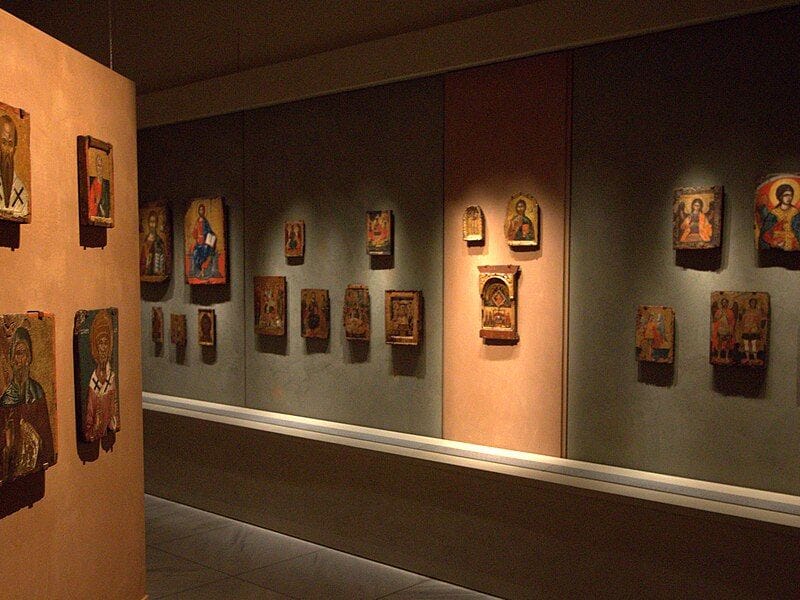
Christianity reached Thessaloniki early — the Apostle Paul himself preached here around 50 AD, addressing his letters To the Thessalonians, some of the New Testament’s earliest writings.
By the 4th century, with the legalization of Christianity, the city saw its first great basilicas rise. Pagan temples gave way to sanctuaries adorned with marble, mosaics, and candlelight.
The architecture followed the basilica plan — long naves, columns of carved stone, and apse mosaics that shimmered with gold, proclaiming divine light.
These were not mere buildings, but declarations of a new worldview: faith embodied in structure, stone shaped by prayer.
Agios Demetrios — The Heart of Faith and Martyrdom
Among Thessaloniki’s sacred landmarks, none is more revered than the Church of Agios Demetrios.
Built over the site where the city’s patron saint was martyred in the early 4th century, the church became a focal point of local devotion.
Destroyed and rebuilt several times — by fire, earthquake, and invasion — the basilica still preserves fragments of 7th-century mosaics that glow with spiritual serenity.
They depict Saint Demetrios not as a distant saint but as a companion, protecting Thessaloniki and its people.
Even today, pilgrims gather here to venerate his relics and draw water from the crypt, believed to be miraculous.
To stand within these walls is to feel the pulse of Byzantine faith — steadfast, luminous, and profoundly human.
Acheiropoietos — The Church “Not Made by Human Hands”
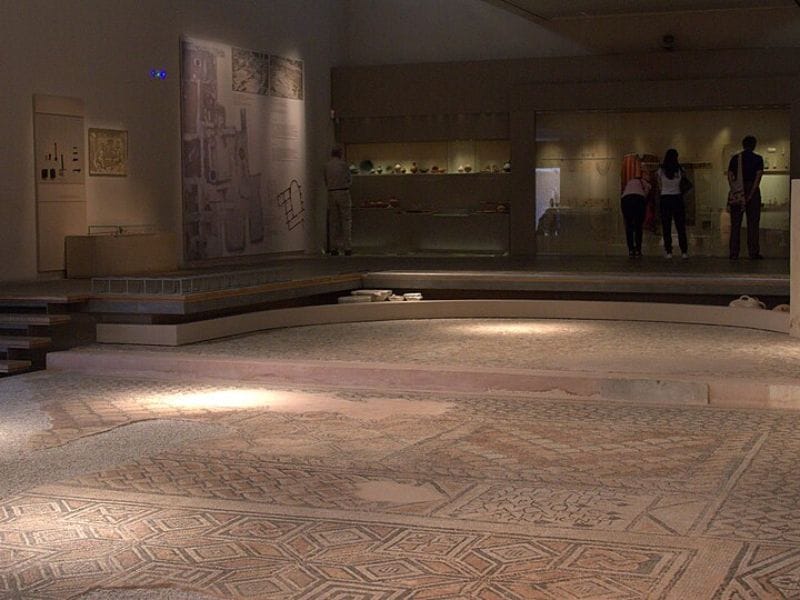
A short walk from the Roman Forum stands the Acheiropoietos, one of the oldest surviving basilicas in Greece.
Its name — meaning “not made by human hands” — refers to a miraculous icon of the Virgin Mary once kept within.
Built in the mid-5th century, this church reflects the transitional beauty of early Byzantine architecture: marble colonnades from older Roman structures, elegant capitals carved with vine motifs, and windows that flood the nave with soft Mediterranean light.
Unlike many ancient sanctuaries, Acheiropoietos has never ceased to function as a place of worship. It remains a living link to the city’s early Christian identity — a temple where the faith of Thessaloniki continues unbroken for over 1,500 years.
Rotunda and Hagia Sophia — Geometry of the Divine
Few buildings capture the continuity of Greek and Roman genius like the Rotunda.
Originally built by Emperor Galerius around 306 AD — perhaps as a mausoleum or temple — it was later transformed into one of the first Christian churches.
Inside, the dome bursts with magnificent mosaics: angels, saints, and golden light cascading from heaven. The Rotunda’s perfect circle symbolized eternity, while its transformation from imperial to sacred space mirrored the shift from empire to faith.
Nearby stands Hagia Sophia of Thessaloniki, a 7th–8th century masterpiece inspired by Constantinople’s great cathedral.
Its dome mosaic of the Ascension of Christ, surrounded by angels, epitomizes the serene grandeur of Byzantine art.
Together, these monuments mark the evolution of sacred architecture — from Roman monumentality to Byzantine mysticism.
Art as Faith — The Birth of Byzantine Aesthetics
The Early Christian churches of Thessaloniki were not only centers of worship but workshops of creativity.
Here, mosaicists and painters developed the signature style that would define Byzantine art for a millennium: luminous colors, spiritual abstraction, and the interplay of light and gold.
Figures in these mosaics seem to hover between worlds — grounded in stone yet touched by eternity.
This new aesthetic was a theology of beauty: every color chosen to convey divine truth, every gesture revealing an unseen reality.
Preserving the Dawn of Byzantium
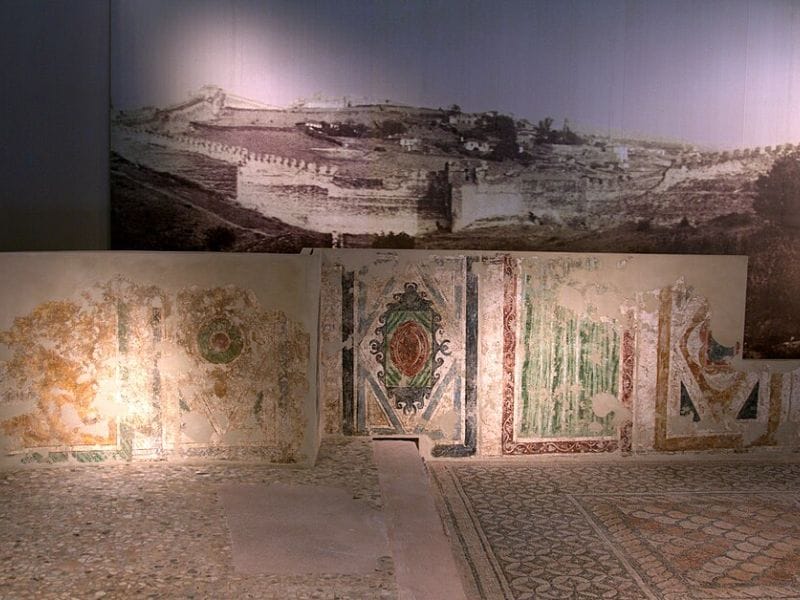
In 1988, Thessaloniki’s Early Christian and Byzantine monuments were collectively inscribed on the UNESCO World Heritage List — a recognition of their universal value.
Preserved with care by the Museum of Byzantine Culture and Greece’s archaeological services, these churches are not relics but living sanctuaries.
Visitors today can still light a candle beneath their domes, hear the echo of ancient chants, and trace the same paths once walked by the city’s first believers.
Thessaloniki stands as one of the few places in the world where the dawn of Byzantine life still glows with such immediacy.
Legacy of Faith and Light
To explore the Early Christian churches of Thessaloniki is to witness the moment when faith reshaped civilization — when marble and mosaic became instruments of the divine.
Here, amid the fragrance of incense and the shimmer of gold, Byzantium was born.
It was not just an empire of emperors, but an empire of believers — artisans, saints, and dreamers who saw the world as a reflection of heaven.
Thessaloniki keeps that light alive, a city where the spirit of early Christianity still illuminates the modern age.