
10 Places Where Byzantine Heritage Meets Street Life
Table of Contents
Introduction
In Thessaloniki, history is not something sealed behind museum doors — it walks beside you. The city’s Byzantine Heritage doesn’t exist only in hushed interiors or carefully roped monuments. It breathes in busy sidewalks, café chatter, street traffic, and the quiet rituals of local life.
Walk without a strict plan and you’ll begin to notice it: a chapel squeezed next to a bakery window. A medieval tower rising behind a bus stop. A faded mosaic just visible beyond an iron fence. This is where Byzantine Heritage becomes something lived, not visited — woven directly into the city’s everyday rhythm.
Here are ten places where the Byzantine past and modern street life meet in the most unexpected and vivid ways.
1. Hagios Demetrios — The Sacred Heart in Daily Motion
The great basilica of Hagios Demetrios has anchored Thessaloniki’s spiritual identity since the 5th century. Step inside and you enter soft candlelight and centuries of devotion surrounding the saint’s relics. Step back outside and the spell shifts instantly: passing taxis, schoolbags bouncing along sidewalks, kiosks selling newspapers and gum.
This constant contrast — prayer inside, noise outside — defines Byzantine Heritage in Thessaloniki more clearly than any guidebook ever could.
2. The Rotunda — Faith in a Student Hub
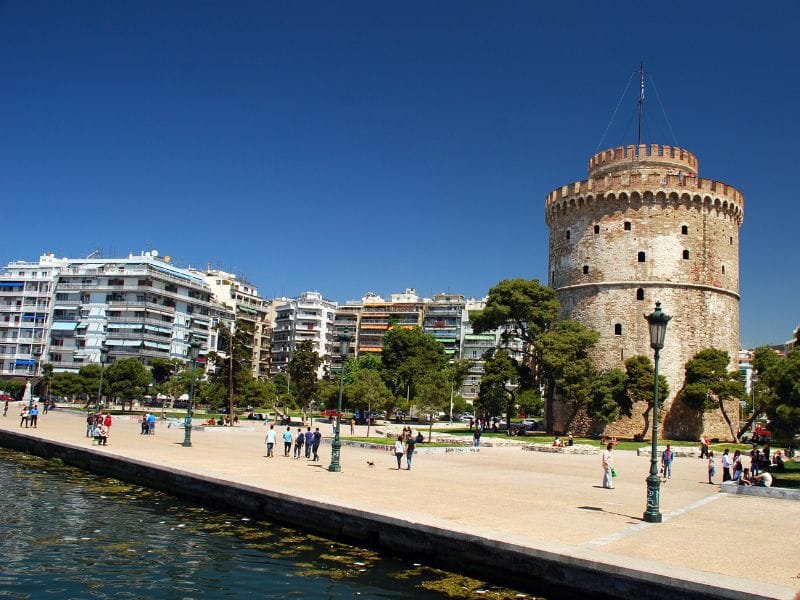
The monumental Rotunda stands at Kamara, where university life pulses around it day and night. Students revise over coffee, conversations spill from open balconies, street musicians fill the square with sound. And directly beside it towers a 1,600-year-old structure that has served as mausoleum, church, mosque, and museum.
Here, Byzantine Heritage doesn’t dominate the neighborhood — it quietly observes it.
3. Panagia Chalkeon — A Red-Brick Oasis in Traffic
Sitting awkwardly inside a triangle of speeding roads, this small 11th-century church feels like a fragile calm caught in motion. Cars stream past. Horns echo. And yet inside the courtyard, locals still pause to light candles, sit beneath trees, and breathe.
The contrast feels cinematic — a perfect snapshot of how Byzantine Heritage survives without separating itself from modern chaos.
4. Agia Sophia Square — Domes and Coffee Cups
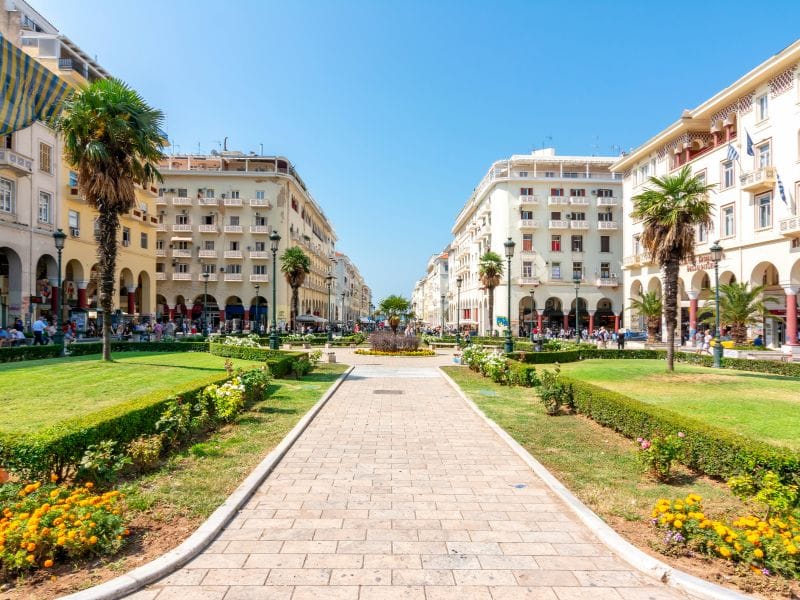
Agia Sophia’s grand dome towers above one of the city’s busiest social hubs. Beneath it, café tables fill with art students, flower vendors, couples talking too long over espresso, musicians testing melodies.
This is where Byzantine Heritage meets living culture in almost perfect balance — monumental faith rising directly from casual urban life.
5. Navarinou Square — Ancient Foundations, Modern Energy
Under Navarinou Square lie the remnants of a Byzantine palace complex. Above ground, graffiti walls glow with color. Skateboards clatter across stone. Voices collide in laughter, debate, and music sessions that erupt without warning.
History here doesn’t sleep — it hosts street life directly on top of it. Few places express Byzantine Heritage as boldly as this collision of eras.
6. The Byzantine Bath — Hidden Ritual in a Residential Block
Deep in Ano Poli, tucked between apartment buildings, lies one of Greece’s last surviving Byzantine bathhouses. Built in the 14th century, this stone-domed complex now occasionally hosts art exhibitions or performance installations.
Most visitors don’t plan to see it. They simply stumble upon it while exploring uphill — turning a corner into eight centuries of continuity. A surprisingly intimate encounter with Byzantine Heritage.
7. Acheiropoietos — Ancient Art Beside Fashion Stores
A few meters from the buzz of Egnatia Street — and almost within reach of Zara’s storefront windows — stands the 5th-century basilica of Acheiropoietos. Its early Christian mosaics are among the oldest in Greece, yet thousands walk past daily unaware what rises next to their shopping bags.
Few scenes capture the quiet nature of Byzantine Heritage better: monumental art hiding in plain sight.
8. Olympiados Street — Icons Above the Sidewalk
Follow Olympiados uphill and let your eyes wander. Small chapels appear almost without warning — built into apartment blocks, hidden behind gates, or squeezed into alley corners.
Locals pause briefly at these icons on their way to grocery shopping or school pickups. No ceremony. Just habit. This is Byzantine Heritage at its most human — faith not preserved behind glass, but practiced casually in passing.
9. Vlatadon Monastery — Serenity with a City View
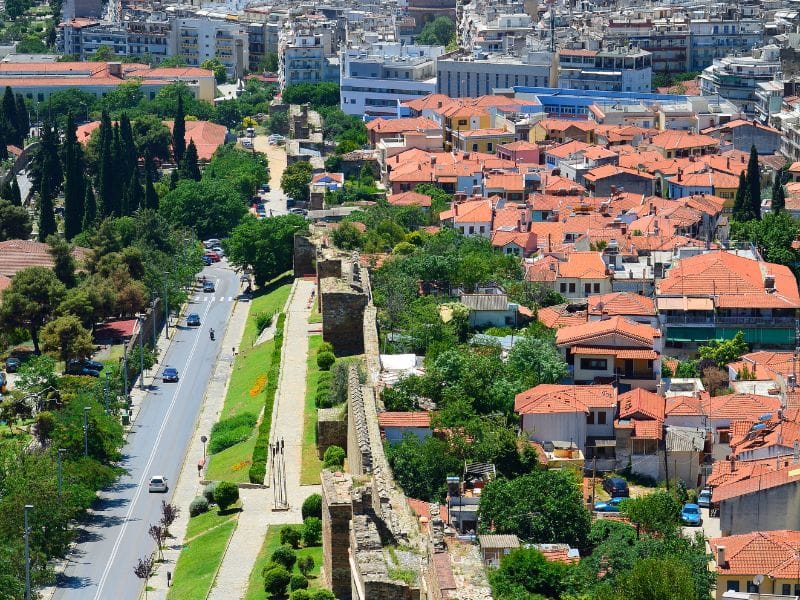
Still fully active, the monastery overlooks the city from its hilltop position. Teenagers sit along its walls taking selfies against the sea panorama while inside, monks chant prayers unchanged for centuries.
It’s a soft coexistence: spiritual continuity beside everyday life. A living image of Byzantine Heritage adapting without dissolving.
10. Kassandrou Street — Towers Among Shopfronts
Walk along Kassandrou and suddenly the past interrupts the present. One moment you pass a supermarket and hair salon — the next, a stone tower from the 10th century rises beside the pavement, ivy climbing its walls.
Most pedestrians never slow down here. But those who do glimpse something rare: Byzantine Heritage embedded exactly where you least expect it.
Where Heritage Becomes Everyday
In Thessaloniki, Byzantine Heritage doesn’t sit locked behind velvet ropes. It stands beside you while you wait for coffee. It hides behind apartment hedges. It flickers in candlelight behind storefront glass.
This is a city where history refuses to stay past — it insists on living fully in the present.
So walk slowly. Look twice. Pay attention to the small domes overhead, the weathered stone near your feet, the icons above streetlights.
Because here, Byzantine Heritage never really ended.