
Death and Afterlife in Byzantium: Symbols You’ll See Explained
Table of Contents
Afterlife in Byzantium: What the Symbols Really Meant
Death in Byzantium was not treated as something final. It was understood as a passage — something that continued rather than stopped. You don’t need to read a history book to notice this. If you spend a bit of time in places like the Museum of Byzantine Culture in Thessaloniki, the idea starts to reveal itself quietly.
Not through dramatic scenes, but through small details — inscriptions, symbols, simple objects that carry meaning. At first, they don’t seem particularly striking. Then, slowly, they begin to connect.
A Different Relationship with Death
Today, death is often pushed aside. It feels distant, uncomfortable, something to avoid. In Byzantium, it was the opposite. People spoke about it openly, shaped it through language, and gave it structure. You can see this most clearly in funerary inscriptions. Many of them don’t describe loss in the way we expect. Instead, they speak about rest.
“He sleeps in Christ.”
“Peace to her soul.”
It’s a different tone entirely. Death becomes something softer — not disappearance, but transition. Almost like sleep. That shift in language changes how everything else is understood.
Where These Ideas Came From

The concept of the afterlife in Byzantium didn’t appear suddenly. It developed over time. Earlier traditions from the Greek and Roman world already imagined a form of continuation after death — places like the Elysian Fields, where the soul carried on in a peaceful state.
When Christianity spread, these ideas didn’t vanish. They changed shape. Paradise replaced older visions, but traces of the past remained. You can actually see this blending in Byzantine art.
Decorative elements feel classical, almost familiar, while the symbols themselves point toward Christian belief. It’s not a clean break. It’s a transition that happened gradually, layer by layer.
The Symbols You Start Noticing

Once your eye adjusts, certain patterns appear everywhere. Doves, for example, show up often. They suggest peace, but also movement — the idea of a soul continuing its journey. Wreaths and garlands are another recurring detail. They come from earlier traditions but take on new meaning, representing eternity rather than victory.
Then there’s the image of the Good Shepherd — a figure carrying a sheep across his shoulders. It feels gentle, almost personal. Protection, guidance, care. None of these were random choices. They were visual ways of explaining something difficult to describe directly.
Quiet Tombs, Not Monumental Ones
If you compare Byzantine funerary art to other cultures, something stands out immediately. It’s restrained. There’s no overwhelming scale, no dramatic display of power. Instead, you find simple marble slabs, modest carvings, short inscriptions. The atmosphere feels almost private.
This wasn’t about impressing others. It was about offering comfort — to the living as much as to the dead. And that changes how you experience these objects. They don’t push themselves forward. You have to meet them halfway.
Memory as Something Active
Death didn’t end relationships in the Byzantine world. It changed them. Objects like ossuaries, small offerings, or fragments of funerary decoration suggest that remembrance was ongoing. People didn’t just mark a grave and move on. They maintained a connection.
Memory had a role. It was something practiced — not just something felt.
Why This Matters When You Visit
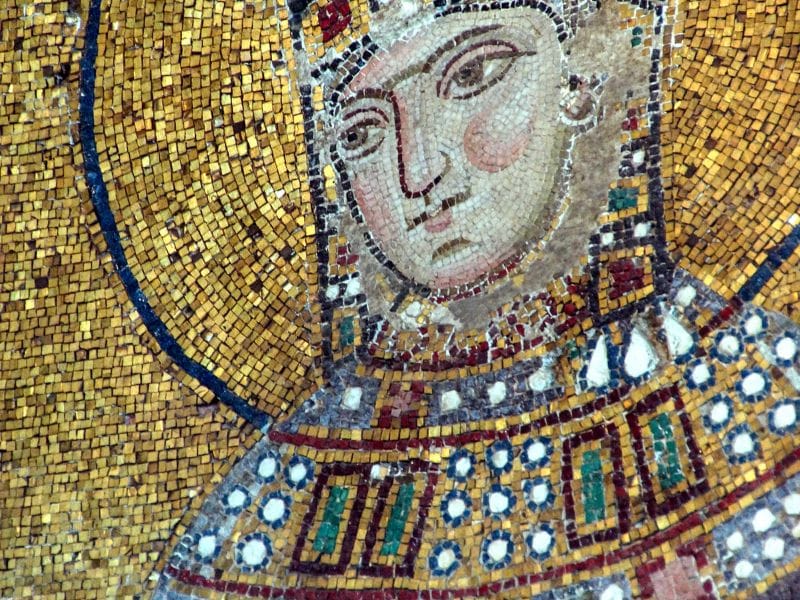
Without context, these objects can feel secondary compared to more “impressive” exhibits. But once you understand the idea behind the afterlife in Byzantium, they shift completely. You’re no longer just looking at stone or decoration. You’re looking at how people dealt with loss, hope, and continuity — in ways that still feel familiar.
That’s when these quieter pieces become the most powerful ones in the room.
A Culture That Didn’t Center Fear
What’s striking is not how much death appears in Byzantine culture, but how it’s treated. There’s no sense of panic. Instead, there’s structure. Meaning. A kind of calm acceptance shaped through belief and expression. That doesn’t make it distant or abstract. It makes it human.
Final Thought
The way a society understands death tells you a lot about how it understands life. In Byzantium, the two were not separated. And once you begin to recognize the symbols of the afterlife in Byzantium, they stop being hidden details. They become part of the story — one that’s still visible, still present, and surprisingly easy to connect with.