
Layers of Faith: The Byzantine Churches of Thessaloniki
Table of Contents
A City That Carries Byzantium in Its Bones
Thessaloniki is one of those rare cities where the past doesn’t feel distant.
You can walk to work, buy a coffee, turn a corner — and suddenly stand in front of a fifth-century apse glowing in the morning light. The byzantine churches of Thessaloniki are woven into the ordinary rhythm of the city, each one a quiet reminder of how faith once shaped daily life.
They are not only monuments. They are part of the city’s heartbeat, still carrying the fragrance of incense, the weight of centuries, and the stories of countless people who prayed, worked, and lived nearby.
Byzantine Churches of Thessaloniki: How Faith Became Architecture
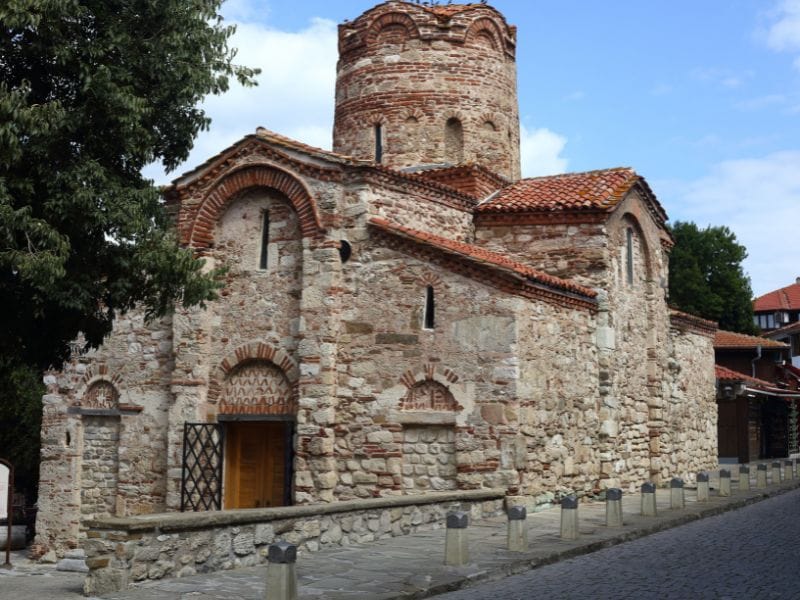
Byzantine architecture was never just engineering. It was a kind of theology in stone.
Domes: A Sky Held by Walls
In many of the byzantine churches of Thessaloniki, the dome acts as the symbolic heavens. Suspended over square foundations, it creates a space where the earthly and the divine seem to touch. Standing beneath one, you feel the intentional balance — geometry used to express belief.
The Cross-in-Square: Order and Harmony
This characteristic plan appears again and again in the city’s churches. It’s simple in shape yet rich in meaning: the perfect cross fitted into a perfect square, an architectural statement about divine order guiding human life.
Light: The Quiet Teacher
Light inside these buildings is never harsh.
It filters through high, narrow openings, washing icons and walls in a soft glow. Byzantine architects didn’t just illuminate spaces — they shaped how visitors felt inside them. In Thessaloniki, this effect is especially powerful. Interiors seem to breathe.
Walls That Tell Their Own Stories
The byzantine churches of Thessaloniki preserve some of the finest mosaics and frescoes in Greece. These are not decorations. They are silent sermons.
Mosaics with Golden Voices
In places like the Rotunda or Hagios Demetrios, golden tesserae shimmer even on cloudy days. Saints look out with calm, eternal faces. Each mosaic is a link between earth and heaven — a vision of the divine painted in stone and light.
Frescoes Filled with Human Emotion
Later churches rely more on fresco than mosaic. Their walls feel more intimate. Stories unfold across domes and vaults — scenes of miracles, processions, and local saints who shaped the city’s spirit.
Every wall in these churches carries meaning, from the marble screens that separate the holy space to the carved capitals with vines, dolphins, or crosses — symbols of renewal and hope.
The Icons of Thessaloniki’s Spiritual Map
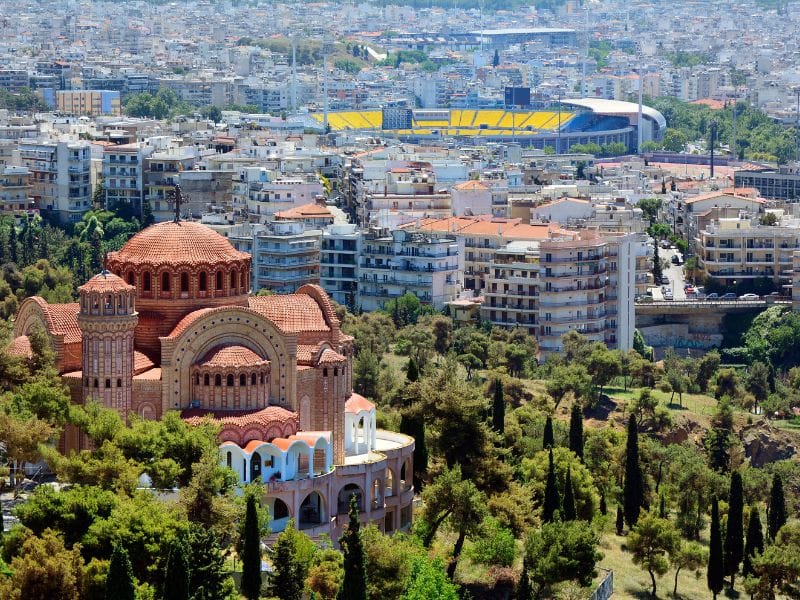
Hagios Demetrios
A basilica devoted to the city’s patron saint. Its crypt, mosaics, and layered history make it a cornerstone of the city’s identity.
The Rotunda
Massive, circular, and filled with rare early Christian mosaics. Its dome is one of the largest surviving sacred spaces of the early Byzantine world.
Hagia Sophia
A masterpiece of Middle Byzantine architecture, where domes, arches, and geometry blend into a unified expression of faith.
Monastery of Vlatadon
Still active today, perched on a hill with views over the sea. Its atmosphere feels untouched by time.
Together, these monuments form a UNESCO ensemble — the byzantine churches of Thessaloniki that protect the memory of an empire and the soul of a city.
How Visitors Experience These Churches Today
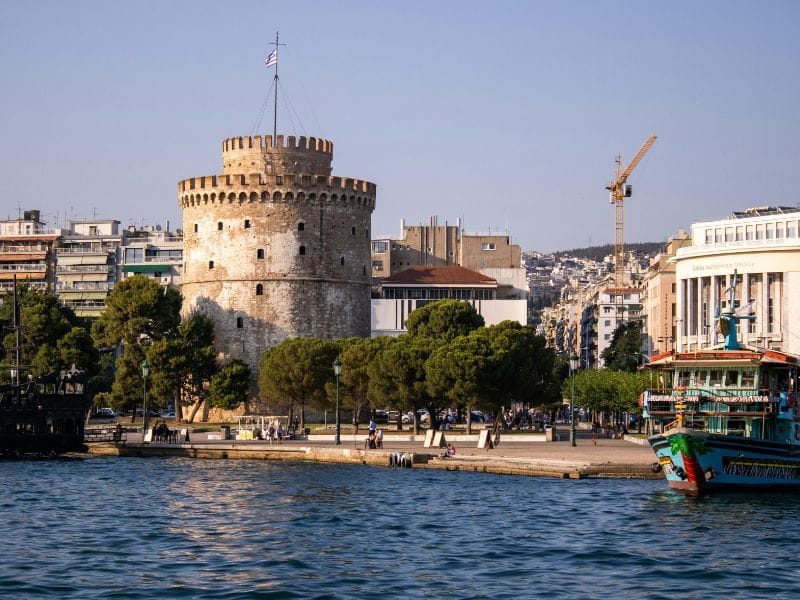
Thessaloniki doesn’t hide its history in fenced-off zones.
You can visit a bakery, then step into a tenth-century church two minutes later. The churches are part of the city’s everyday life.
The Museum of Byzantine Culture adds depth to this experience, helping visitors understand the architectural and spiritual world behind each monument. It reveals how these buildings were constructed, decorated, and used by communities that lived centuries ago.
Exploring the byzantine churches of Thessaloniki can be a pilgrimage, a photography trip, or simply a quiet walk through neighborhoods where the past still whispers.
Where Faith, Art, and Memory Meet
The byzantine churches of Thessaloniki are more than architectural achievements. They are vessels of memory — holding the stories, prayers, and artistry of a civilization that shaped the Mediterranean world.
Their domes, mosaics, and sacred geometry remind every visitor that Byzantium isn’t gone.
It lives on in stone, in light, and in the everyday streets of Thessaloniki.