
City of Thessaloniki Through the Eyes of a Pilgrim
Table of Contents
City of Thessaloniki Through the Eyes of a Pilgrim
Thessaloniki is more than just a city — Thessaloniki is a spiritual journey written in stone, salt air, and whispered memory. For more than two thousand years, pilgrims, travelers, and seekers have walked these same paths, crossing continents and empires. As the second great city of Byzantium, a land shaped by martyrdom, prayer, and coexistence, Thessaloniki invites visitors to experience faith not only through famous churches, but through the subtle way belief breathes through everyday life.
To walk Thessaloniki as a pilgrim is not about counting monuments. It is about learning how to be present.
What It Means to Be a Pilgrim in city of Thessaloniki
A pilgrim isn’t a tourist. A pilgrim hears before seeing and feels before judging.
In the city of Thessaloniki, this means stopping at a tiny roadside shrine without any plan to do so.
Lighting a candle even when you’re unsure why your hands reached for the flame.
Noticing moments of silence hiding inside the city’s ordinary noise.
Asking quietly, time and again: Who prayed here before me?
This is a place where footsteps carry memory.
A Sacred Path Across Thessaloniki
A modern pilgrimage through Thessaloniki might unfold like this:
Hagios Demetrios — The Martyr of the City
More than a church, this basilica forms the spiritual heart of the city. Descending into its crypt brings you face-to-face with centuries of devotion — the scent of myrrh still lingering like a suspended prayer.
The Rotunda — Transformation in Stone
Built by Emperor Galerius and reshaped across eras as church, mosque, and monument, the Rotunda stands as Thessaloniki’s most eloquent symbol of spiritual continuity. Each layer of stone whispers of belief reshaped but never erased.
Vlatadon Monastery — Prayer Above the Sea
Still active, still serene, this monastery overlooks the Gulf like a silent guardian. Visitors often fall into stillness here without explanation — as if the view itself becomes a form of prayer.
Panagia Chalkeon and Hagia Sophia
These two sanctuaries offer contrasting faces of Orthodoxy: one intimate and brick-warm, the other expansive and dome-shadowed. Together they express the emotional breadth of worship within Thessaloniki itself.
Seeing Beyond the Churches of Thessaloniki
But the pilgrim’s vision stretches wider than sanctuary doors.
Hidden sacred encounters await everywhere:
In the small garden of the Museum of Byzantine Culture, where reflection comes naturally.
Along the Ano Poli walls walked by monks centuries ago, still echoing footfalls.
At stone fountains once serving monastic communities.
Through street names preserving saints, emperors, and legends now half-forgotten.
In Thessaloniki, holiness lives not apart from the city — it inhabits it.
Sensing Faith — Thessaloniki Through the Body
Pilgrimage is something you experience physically:
🕯️ Scent — incense drifting through open church doors.
🕍 Sound — bells echoing between rooftops without warning.
✨ Touch — the cool smoothness of marble steps worn hollow by centuries.
📜 Sight — candlelight dancing across aging icons.
☕ Taste — fasting dishes and modest meze shared quietly in neighborhood cafés.
In Thessaloniki, faith is not a display.
It’s lived through sensation.
Encounters Along the Way
Some of the most lasting moments of pilgrimage come not from buildings, but from people.
In the city of Thessaloniki:
A café owner might tell you of a miracle that happened in the neighborhood decades ago.
A nun may quietly offer a prayer for your journey.
A shopkeeper presses a piece of blessed bread into your hand — “Keep it.”
These moments feel unscripted and deeply human. They outlast photographs.
The Multifaith Spirit of Thessaloniki
The city’s sacred story is a tapestry shared by many communities.
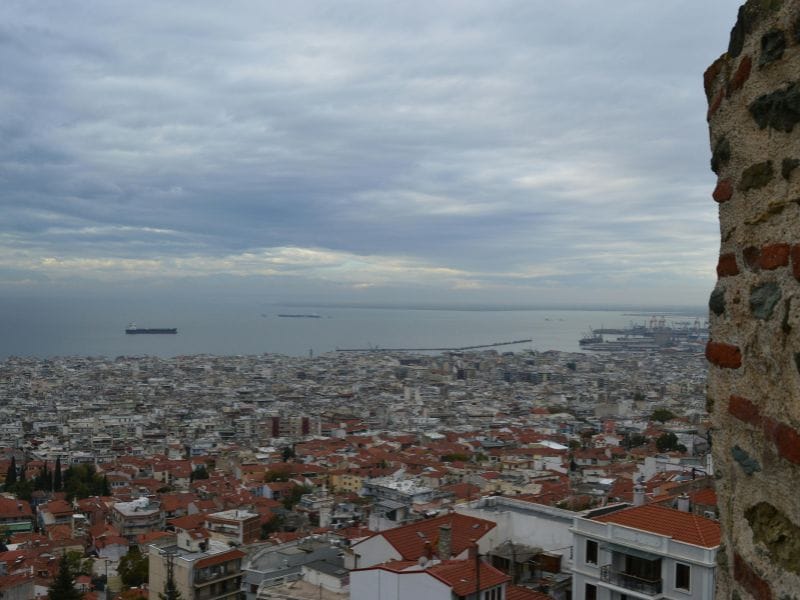
Near the port lie traces of the once-thriving Sephardic Jewish quarter.
Ottoman mosques stand as silent witnesses to Islamic spiritual life.
Early Christian martyr sites coexist with Roman ruins and Byzantine sanctuaries.
Walking as a pilgrim through the city of Thessaloniki means traveling across faiths — not past them.
You Never Walk Alone in Thessaloniki
Pilgrimage teaches you to slow down, to listen, and to let spaces speak.
In Thessaloniki, you may arrive as a visitor, but you often leave changed — not by spectacle, but through quiet encounters: a sound of bells, a scent of incense, a fragment of sunlight touching ancient stones.
The city never offers miracles loudly.
It offers them gently.
And like every pilgrim before you, once you’ve walked Thessaloniki, you begin to understand why people always feel the pull to return.