
How to Experience Faith in Thessaloniki Beyond the Churches
Table of Contents
How to Experience Faith in Thessaloniki Beyond the Churches
Thessaloniki does something unusual with spirituality — it doesn’t place it behind walls. You don’t have to step inside a sanctuary to sense the presence of belief here. Sometimes it happens mid-walk, between traffic sounds and snippets of conversation. You look up, and a church dome floats suddenly above the street. Someone pauses beside you to cross themselves before turning the corner. And for a moment, the city softens.
This is what Faith in Thessaloniki feels like: not ceremonial or staged, but quietly woven into daily life. You don’t encounter it by following a map. You simply notice it when you slow down enough to see what’s already around you.
Thessaloniki — A Spiritual Crossroads Beyond Walls
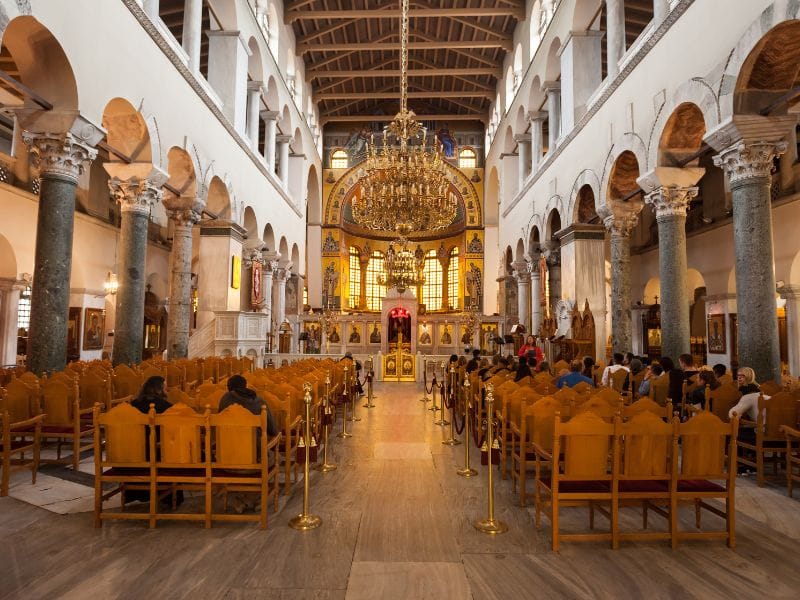
For centuries, Thessaloniki stood between cultures and religions. Christian martyrs prayed under Roman rule. Byzantine monks walked streets that later echoed with Ottoman Sufi chants. A vibrant Jewish community added its own rituals and rhythms. None of these traditions erased the others; they layered over time.
What remains isn’t one loud statement of belief — it’s a kind of spiritual echo that drifts through the city.
It’s the reason Faith in Thessaloniki never feels confined to sacred architecture. It exists in small habits: the exchange of blessings between neighbors, the candles carried quietly through crowded streets, the personal stories shared without spectacle.
Saints, Symbols, and Passing Prayers
You’ll probably notice devotion first in motion rather than in monuments.
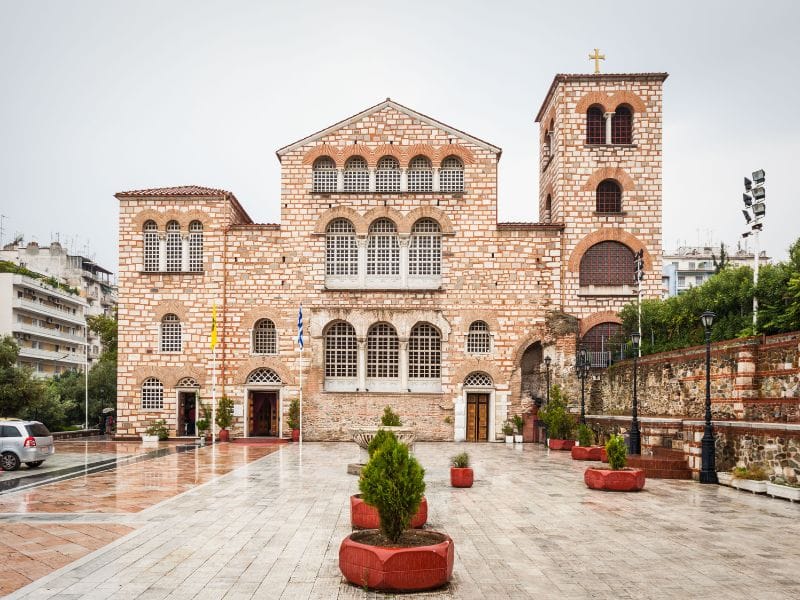
Near Saint Demetrios, locals pause almost unconsciously to light candles before continuing on their way. Some never even step inside the church — the brief ritual alone is enough. Taxi dashboards hold small icons tucked near the steering wheel. Shop windows display saints beside receipts and souvenirs. Homes welcome visitors with a cross hanging quietly above the doorway.
None of these gestures are performed for an audience.
They feel private — part of the invisible fabric of Faith in Thessaloniki that moves with everyday routines.
Walking Streets with Long Memories
Certain streets in Thessaloniki feel heavier than others, even if nothing obvious marks them.
Egnatia Street follows the ancient Via Egnatia — once a sacred artery crossed by emperors, merchants, and early missionaries. Olympiados Street winds through Ano Poli, where small chapels appear unexpectedly between houses, blending devotion with domestic life.
Even lively Navarinou Square rests above early Christian martyr sites now buried beneath cafés and music bars — layers stacked so tightly that the city’s contrasts almost blur together.
A strange thing happens if you walk slowly here — you start to feel the past more than you see it.
Spaces That Invite Quiet
Outside formal worship, Thessaloniki offers places that invite reflection without instruction.
The small garden beside the Museum of Byzantine Culture is one such corner. People sit there not to study history but to pause — to breathe between errands.
Up in Ano Poli, the courtyard of Vlatadon Monastery stands open to the sky. The gulf shimmers below. Visitors often fall silent without quite knowing why.
And along the old walls, weathered stone benches catch the late sun. Locals rest here, gazing westward. There’s nothing sacred officially assigned to these spaces — yet they carry stillness naturally.
This is another side of Faith in Thessaloniki: quiet presence without formal prayer.
Beyond Christianity — Shared Memory of Belief
To speak honestly about Faith in Thessaloniki means recognizing its diversity.
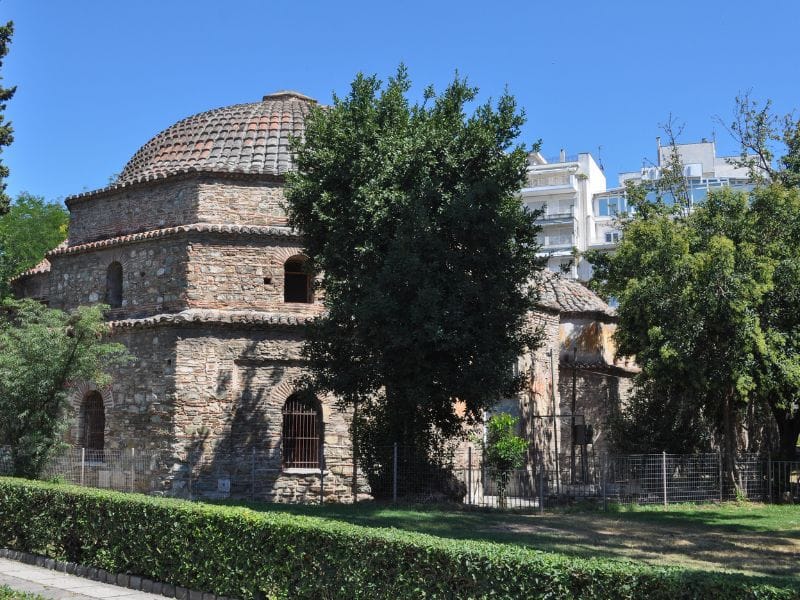
The Jewish Museum preserves stories not only of faith but of survival and loss. The abandoned Hamza Bey Mosque recalls centuries when Islamic mysticism shaped the city’s spiritual life. Greek Orthodoxy remains prominent, yet it never wholly eclipsed these other traditions.
Something subtle grew from this coexistence.
Many locals feel comfortable entering churches regardless of background — not for worship, but for peace. Lighting a candle has become almost universal, detached from strict religious boundaries.
Faith here often feels shared rather than separated.
Where Faith Lives in Daily Life
Markets open with vendors making quiet crosses before touching their goods. Grandparents keep blessed bread on kitchen shelves. Café owners swap stories about neighborhood saints or unexplained signs, told casually between pouring coffees.
Sit at a small kafeneio in Ano Poli long enough and faith will find its way into conversation — not dramatically, just naturally, tucked into stories told as easily as family history.
And hospitality itself carries spiritual weight in Thessaloniki. Feeding someone feels less like service and more like offering.
Faith as a Way of Moving
You don’t need to identify with any tradition to experience Faith in Thessaloniki.
All you need is a softer pace.
Listen for bells drifting across rooftops. Notice candles burning where no one seems to be watching. Pay attention to the pauses people make — moments so brief you might miss them if you hurry past.
Here, belief isn’t carved into monuments alone.
It walks beside you, quietly, through the everyday city.