
Hidden Byzantine Places in Thessaloniki: Discovering the City’s Quiet Legends
Table of Contents
Hidden Byzantine Places in Thessaloniki
Thessaloniki rarely reveals its secrets at first glance. Beyond its lively promenade and busy market streets, the city hides quieter stories — fragments of stone, faded frescoes, and forgotten domes that still whisper of a distant empire.
While most visitors head straight for celebrated landmarks, the real discovery often lies elsewhere. The magic of Hidden Byzantine Places in Thessaloniki begins when you step away from the guidebook route and let curiosity guide your walk.
These lesser-known sites don’t announce themselves with signs or queues. They wait patiently behind iron gates, tucked into wooded corners, or pressed between apartment buildings and neighborhood cafés.
Finding them feels less like sightseeing and more like uncovering something private — moments where the modern city pauses and Byzantium quietly steps forward.
A City Layered With Memory
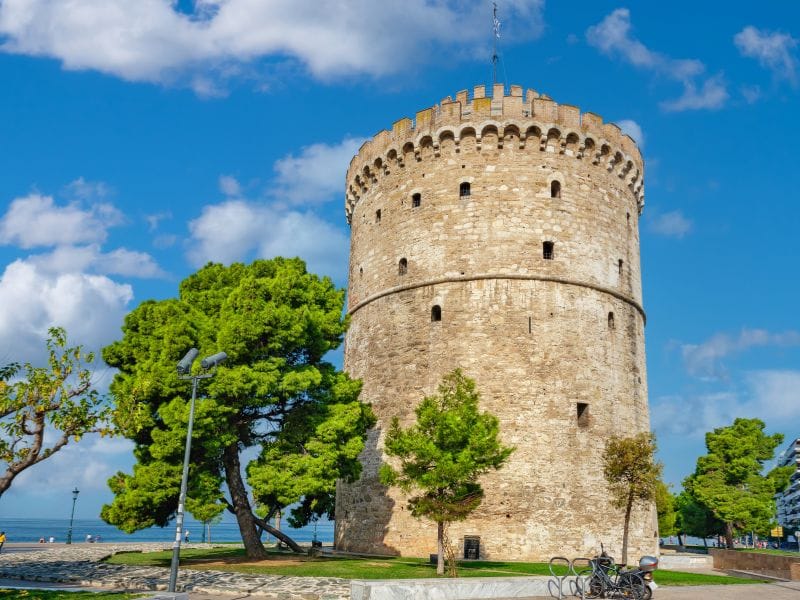
For more than a thousand years, Thessaloniki ranked second only to Constantinople in the Byzantine world. Yet unlike many historic cities where ancient monuments stand isolated, here the past blends seamlessly into everyday life.
That is the unique charm of the Hidden Byzantine Places in Thessaloniki.
You might pass a bakery fragrant with warm bread and suddenly notice a weathered mosaic through a fence. You could sip espresso on a corner terrace without realizing that only a few meters away rises a chapel older than entire European capitals. There is no grandeur separating these spaces from modern rhythms — only coexistence.
Six Quiet Byzantine Corners Worth Discovering
1 — The Byzantine Bath (Λουτρό)
Nestled near Theotokopoulou Street in Ano Poli, Thessaloniki’s Byzantine bathhouse is one of the rarest survivals of everyday medieval life in Greece. Built in the 14th century, it once functioned as a communal space for cleansing, conversation, and ritual routine.
Visitors often walk past unaware. Step indoors and the mood shifts instantly — the temperature cools, echoes soften, and the domed ceiling creates a hushed atmosphere shaped more by daily humanity than imperial ceremony.
🎫 Now used occasionally for exhibitions — worth checking access times locally.
2 — Saint Nicholas Orphanos
Behind a low stone wall and shaded by tall trees stands one of the city’s greatest artistic surprises. Saint Nicholas Orphanos is a modest chapel whose interior bursts with early 14th-century frescoes covering nearly every surface.
The monastery that once surrounded it disappeared centuries ago, leaving behind a single sacred room filled with color and emotion. The figures in the frescoes appear gentle yet expressive, their paint still radiant after hundreds of years.
🙏 Silence comes naturally here. Most visitors instinctively lower their voices.
3 — Prophet Elijah Church
Perched near the city’s old fortifications, the Church of Prophet Elijah dominates the hillside — yet rarely attracts crowds. Reaching it requires navigating winding uphill streets, a journey that rewards you with wide views over rooftops toward the sea.
The church’s striking octagonal design sets it apart. Rising boldly against the skyline, it combines architectural grandeur with surprising seclusion, standing quietly above the pulse of everyday Thessaloniki.
4 — Hosios David (Latomou Monastery)
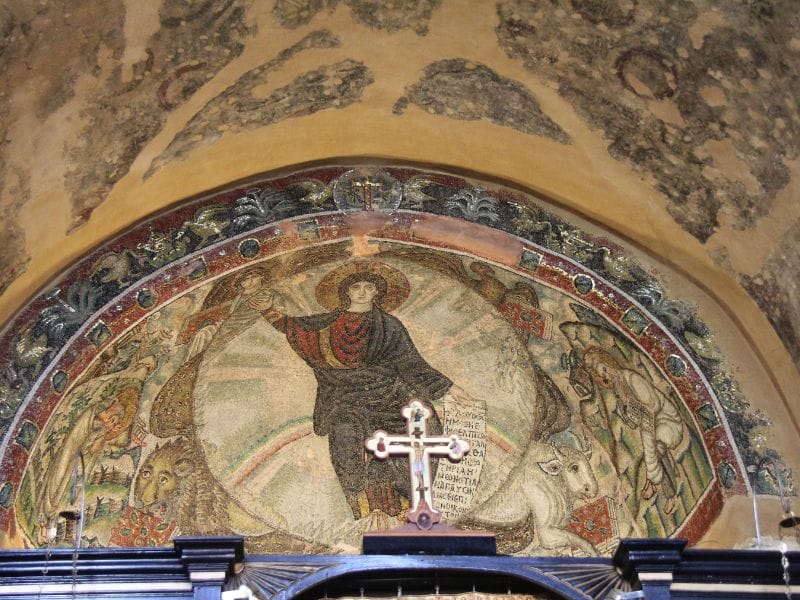
This tiny sanctuary shelters one of the rarest pieces of early Christian art in Europe — a 6th-century mosaic depicting Christ young, radiant, and deeply human.
Hidden beneath plaster for centuries during iconoclastic periods, the mosaic survived precisely because no one could see it. Today, discovering it feels like stepping into a carefully guarded secret. Among all the Hidden Byzantine Places in Thessaloniki, this is often the most emotionally powerful stop.
🖼️ Few mosaics from this period remain — this one alone makes the walk worthwhile.
5 — The Forgotten City Walls
Venture north into neighborhoods like Tsinari and fragments of medieval walls suddenly appear beside parking lots or gardens. Towers lean against residential blocks. Laundry hangs where sentries once stood watch.
This blending of daily life with ancient fortification produces moments impossible to plan — history appearing casually beside groceries and scooters.
6 — Olympiados Street’s Chapel Trail
Walk slowly along Olympiados Street and let your eyes wander. Half-sunken chapels emerge from sidewalks or sit compressed between buildings, crowned with simple domes.
Many remain locked. Some display icons behind glass. Outside, candles flicker where local residents quietly uphold ancient traditions. These chapels weren’t built for emperors — they served ordinary neighborhoods, which makes their survival all the more moving.
Why These Sites Remain Overlooked
After the Great Fire of 1917 and the rapid expansion that followed, Thessaloniki rebuilt fast. Rather than isolating Byzantine remains behind fences, the city wove them into new neighborhoods.
Over time, memory faded — but the remnants stayed exactly where they were.
The resulting landscape makes the Hidden Byzantine Places in Thessaloniki feel deeply personal. They aren’t curated attractions. They are discoveries waiting behind everyday routines.
Gentle Tips for Exploring
🗺️ Use specialty walking maps or church heritage apps.
📷 Aim for early morning or golden hour light.
🤫 Stay mindful — many sites remain sacred spaces.
🕍 Pair visits with time at the Museum of Byzantine Culture to gain artistic context.
💡 Locals often know what maps omit — asking can reveal remarkable shortcuts to history.
Final Thoughts — Byzantium in the Quiet Places
Thessaloniki doesn’t preserve Byzantium in sealed showcases alone. It shelters it in side streets, behind wooden doors, beneath candle flames and shadowed mosaics.
The Hidden Byzantine Places in Thessaloniki are not static monuments. They are living fragments of faith, artistry, and survival — still breathing within a modern city.
When you find one unexpectedly, something special happens.
You stop sightseeing.
You start experiencing history.