
The Language of Light: Kyriakos Krokos and the Architecture of the Byzantine Museum
Table of Contents
An Architect Who Built Silence
In Thessaloniki, there’s a museum that doesn’t just hold history — it feels alive.
The Museum of Byzantine Culture Thessaloniki is one of those rare places where architecture seems to breathe along with you. It’s calm, deliberate, almost spiritual.
The man behind it, Kyriakos Krokos, wasn’t interested in loud gestures. Born in Samos in 1941, he believed architecture should whisper rather than shout. He studied in Athens, but his ideas reached far beyond trends or styles. For Krokos, every building was a way of exploring balance — between stone and light, body and soul.
He often said that a space should make you think without realizing it. When you step inside his museum, you understand exactly what he meant.
Designing the Spirit, Not the Form
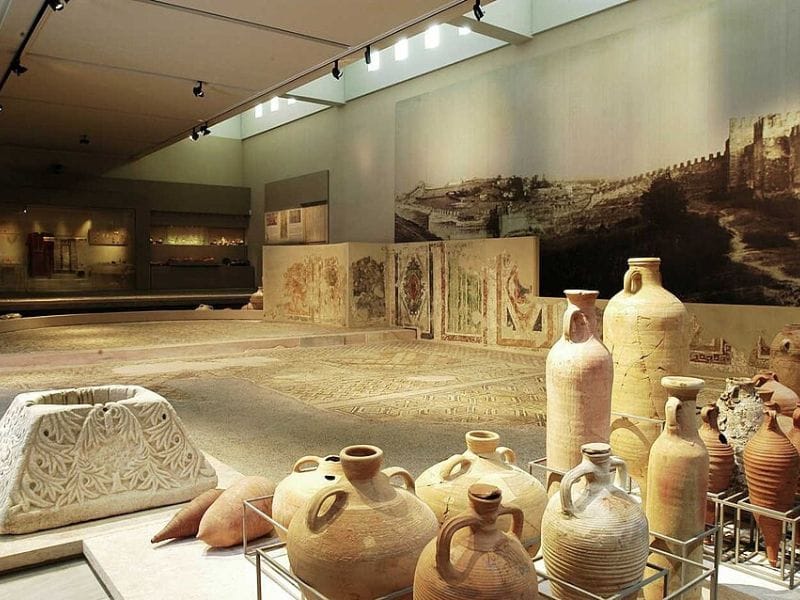
Back in the 1980s, when Thessaloniki called for designs for a new Byzantine museum, most architects imagined something grand — domes, arches, heavy symbolism.
Kyriakos Krokos took the opposite approach. He didn’t want to copy Byzantium; he wanted to translate it.
His design used simple materials, measured geometry, and soft light — the kind that doesn’t blind, but reveals. The result is both modern and timeless, like a memory turned into space.
Walking through it, you don’t see obvious religious forms, yet everything somehow feels sacred.
When the museum opened in 1994, it was quietly revolutionary. It showed that Greek architecture could be contemporary and spiritual at once — and people noticed. Krokos’ work earned both national and international acclaim for exactly that reason: its humility.
Light as a Kind of Prayer
For Kyriakos Krokos, light wasn’t decoration. It was meaning.
In the Museum of Byzantine Culture in Thessaloniki, daylight seeps in through thin vertical slits, spilling softly onto pale stone. It moves, changes, never overwhelms.
You feel time passing — the slow rhythm of morning to afternoon — just through the way the shadows shift. It’s almost like watching an icon come to life, where light becomes a symbol of something divine.
Krokos once said that light was “the only honest ornament.” Looking around his museum, you realize that’s true. The building itself glows with restraint.
Geometry, Movement, and Human Scale
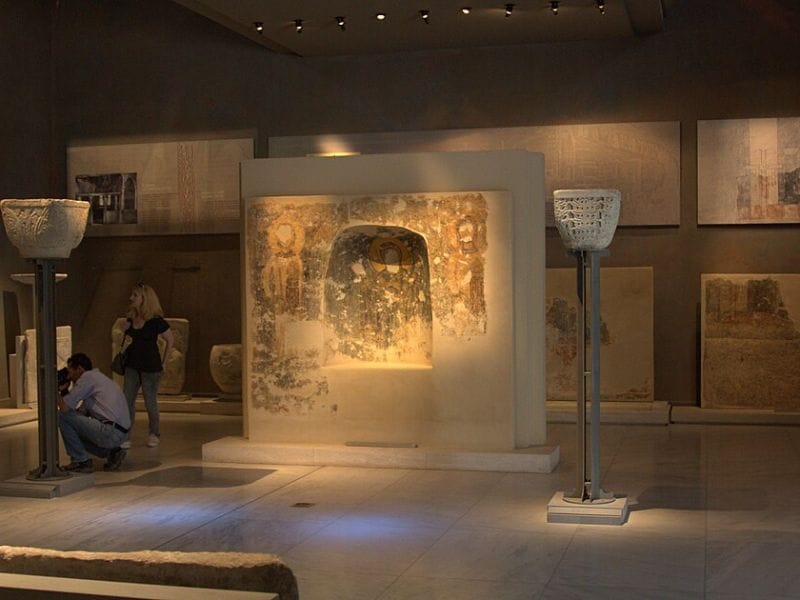
Everything in the museum feels measured — not mathematically, but emotionally.
Corridors narrow and then open into small courtyards. Stairs turn unexpectedly. A single window lights a wall just enough to make you stop.
There’s a rhythm to it — a quiet pulse that makes you slow down without noticing. Nothing dominates; everything cooperates.
It’s the kind of architecture that doesn’t impress you at once, but stays with you for days after.
Many visitors describe it as a “walking meditation.” I’d agree. The building doesn’t ask you to look — it asks you to listen.
The Beauty of Imperfection
Unlike the glass-and-steel perfectionism of most modern museums, Krokos’ design accepts imperfection.
He preferred materials that age — brick, marble, rough plaster, wood — things that carry the trace of hands and tools.
The walls aren’t perfectly smooth; they’re textured, uneven, alive. In sunlight, they change color ever so slightly, and you feel that time is part of the architecture.
He once said, “A wall should remember the craftsman who built it.” And here, it does.
That’s why the building doesn’t feel sterile — it feels human. It’s not just a container for artifacts; it is one.
The Visitor’s Path
Walking through the museum isn’t like following an exhibition plan — it’s more like moving through thought.
You start in dim rooms, where ancient Christian relics rest in quiet light. Then slowly, as you advance, the spaces open, the light deepens, and the air feels lighter.
There’s no single climax, no “main attraction.” The building itself is the story. It guides you through a kind of inner pilgrimage — from shadow to brightness, from history to feeling.
When you reach the last room, you notice something simple: your steps have slowed.
Legacy of Kyriakos Krokos

Kyriakos Krokos left behind only a handful of completed works, but each one carries his soul.
His church of Saint Nicholas in Kavala, his private homes in the islands — all share the same humility, the same reverence for light.
He passed away in 1998, far too soon. Yet his influence quietly endures in every Greek architect who believes that modernism doesn’t have to be cold — that architecture can still have a conscience.
In a way, his greatest creation isn’t just the Museum of Byzantine Culture Thessaloniki — it’s the idea that simplicity can be sacred.
Visiting the Museum Today
You’ll find it on Stratou Avenue, right next to the Archaeological Museum.
Go early, before the noise of the city wakes up. The morning light is gentle then, and the courtyards are empty except for the sound of your footsteps.
Take your time — the museum rewards slowness. Watch how the light travels through the hallways, how the air feels cooler near the stone walls.
Afterwards, walk to the Rotunda or Agios Demetrios. You’ll see how the spirit of Byzantium still lingers in Thessaloniki’s streets — not as nostalgia, but as presence.
A Quiet Legacy in Light
Kyriakos Krokos built more than a museum. He built a meditation on being human — on how silence, light, and form can speak without words.
In Thessaloniki, his work stands not as a monument to the past, but as proof that architecture, when done with honesty, can still touch the soul.
Maybe that’s why people leave the Museum of Byzantine Culture Thessaloniki not talking about its exhibits, but about how it felt to be there.