
The Story of the Museum of Byzantine Culture: From Vision to Foundation
Table of Contents
From Vision to Foundation
In Thessaloniki, history doesn’t fade — it transforms. Among its Byzantine churches and Roman walls, one modern structure stands quietly, linking the city’s ancient soul to the present: the Museum of Byzantine Culture.
Its creation was not sudden. For decades, archaeologists, historians, and citizens dreamed of a place where the city’s Byzantine heart could finally have a home. Thessaloniki, after all, had once been the empire’s second capital — a city of mosaics, faith, and empire.
It took time, patience, and the vision of architect Kyriakos Krokos to bring that dream to life.
How the Idea Took Shape
After the Second World War, Thessaloniki began to rediscover itself. The Archaeological Museum, full of ancient treasures, could no longer house the growing collection of Byzantine finds that kept emerging from excavations across the city.
By the late 1970s, the Greek state made a decision that would reshape Thessaloniki’s cultural map: to create a museum devoted entirely to the Byzantine world — not a storeroom of relics, but a living space of reflection.
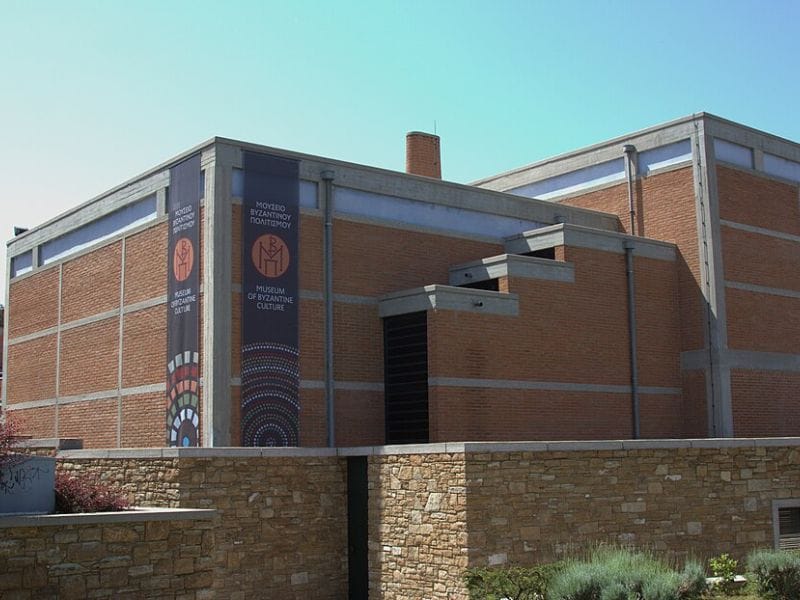
The architectural competition in 1977 drew ambitious proposals, yet Krokos’ design stood out immediately. He didn’t try to copy domes or arches. Instead, he used the language of simplicity — brick, geometry, and light — to express what Byzantium felt like, not just how it looked.
Building an Idea into Stone
Construction began in 1989, moving slowly through years of economic and cultural transition in Greece. Every brick, every corridor reflected Krokos’ approach: measured, thoughtful, unhurried.
The museum’s architecture feels monastic — quiet courtyards, narrow passages, soft light filtering through. Nothing shouts; everything breathes. It’s a building that welcomes contemplation.
When it finally opened in 1994, the Museum of Byzantine Culture became more than a new attraction — it became a statement.
It showed that modern Greece could celebrate its heritage without nostalgia, and that a museum could be both spiritual and contemporary.
Its elegance earned international recognition, culminating in the European Museum of the Year Award in 2005 — proof that subtlety can speak louder than grandeur.
Inside the Museum: A Journey Through a Thousand Years
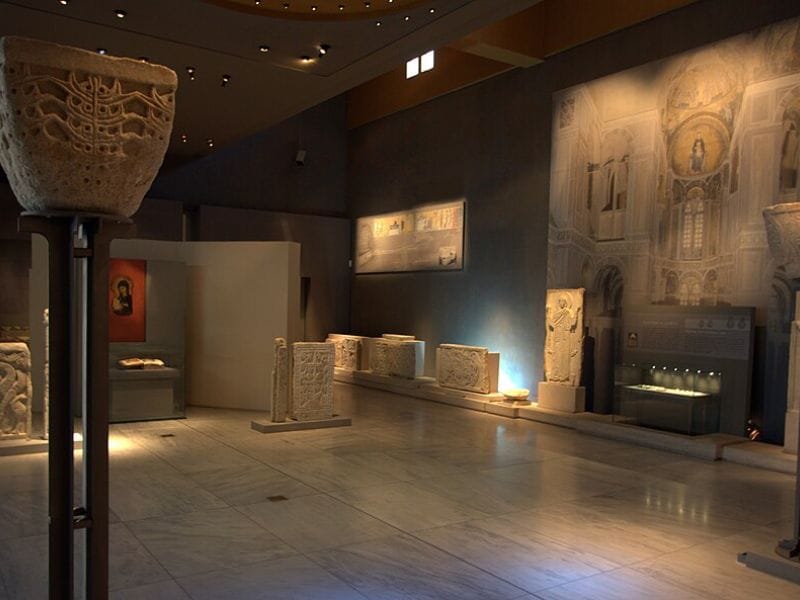
The museum’s permanent collection doesn’t just present history — it tells it in rhythm.
Visitors move through the early Christian centuries, past mosaics that shimmer like frozen light, to the height of Byzantine artistry, and onward to the empire’s final echoes under Ottoman rule.
Every object feels placed with intention: icons, manuscripts, coins, fragments of wall paintings, textiles. The lighting and architecture frame them like moments in a story rather than exhibits in a case.
It’s not just about art — it’s about the people behind it. The potters, scribes, and believers who shaped a civilization that merged faith with daily life.
Thessaloniki — The Natural Stage of Byzantium
If there’s one city destined to host such a museum, it’s Thessaloniki.
For over a thousand years, this was Byzantium’s beating heart — the second capital, the gateway to the Balkans, the city of Saint Demetrios. Its skyline still carries that inheritance, with churches, fortifications, and mosaics that have survived earthquakes, wars, and empires.
The museum doesn’t try to compete with these monuments. It listens to them. It gathers their stories and preserves them for future generations — not as relics, but as reminders of continuity.
For locals, it’s a place of memory. For travelers, a place of understanding.
More Than a Museum

Today, the Museum of Byzantine Culture works like a living institution.
It collaborates with universities and cultural foundations, organizes temporary exhibitions, and hosts educational programs for students and families.
Its conservation labs and archives play a crucial role in preserving fragile artworks, while partnerships with organizations such as the UNESCO Chair on Byzantine Studies help share this heritage globally.
Even beyond its physical walls, the museum reaches out through digital platforms, virtual tours, and research initiatives — ensuring that the story of Byzantium remains alive in the modern world.
The Legacy of a Dream
Looking back, the creation of this museum was an act of faith — not just in history, but in the idea that culture can guide the future.
Every corridor reflects that belief: light spilling on marble, the scent of aged stone, the quiet hum of air over centuries-old art.
It’s a space that teaches without words — a conversation between Krokos’ architecture and the enduring soul of Byzantium.
The Museum of Byzantine Culture is more than a monument to the past.
It’s a reminder that history, when treated with love and imagination, becomes something timeless — not a memory, but a living presence.