
Walking Through Byzantine Thessaloniki in One Day: A Self-Guided Itinerary for History Lovers
Table of Contents
Walking Through Byzantine Thessaloniki in One Day
Thessaloniki has a strange way of pulling you backward in time without warning. You turn a corner and suddenly there’s a dome above you. Walk another block and you’re beside a stone wall that was already old when the Crusades passed through. This city doesn’t display its Byzantine past behind glass. It lets you stumble into it.
Exploring Byzantine Thessaloniki in just one day is ambitious — but not impossible. You won’t see everything. You’re not meant to. What you can do is walk a path that touches the soul of the city, linking its most meaningful monuments into a single unforgettable experience.
Morning — Where It All Begins
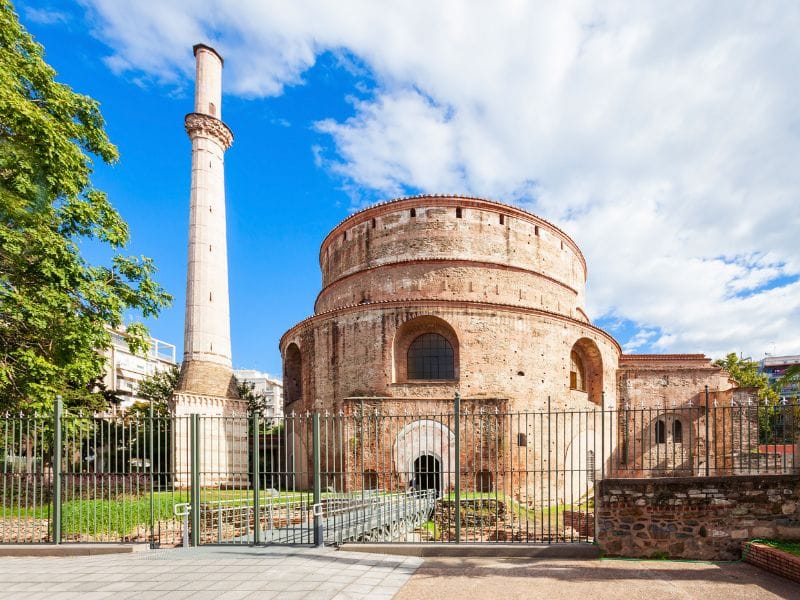
🕘 9:00 AM — The Rotunda
Start at the Rotunda. You almost can’t avoid it — the massive circular structure towers over its surroundings. Built in the early 4th century under Emperor Galerius, it began life as a Roman monument before becoming one of the city’s very first Christian churches. And when you step inside, the centuries fade fast.
The space feels heavy, silent. Look up. The mosaics are still there — fragments of gold and color floating impossibly high above you. The early light filters through narrow windows and catches on the tesserae. It’s one of those moments that actually slows your pace, even if you’re trying to keep to an itinerary.
Outside waits the Arch of Galerius — Kamara — worn but proud, celebrating military triumphs that few modern walkers still remember. Around you stretch the broken outlines of the palace complex, the political heart of what would become Byzantine Thessaloniki.
📸 Pause here longer than planned. It’s worth it.
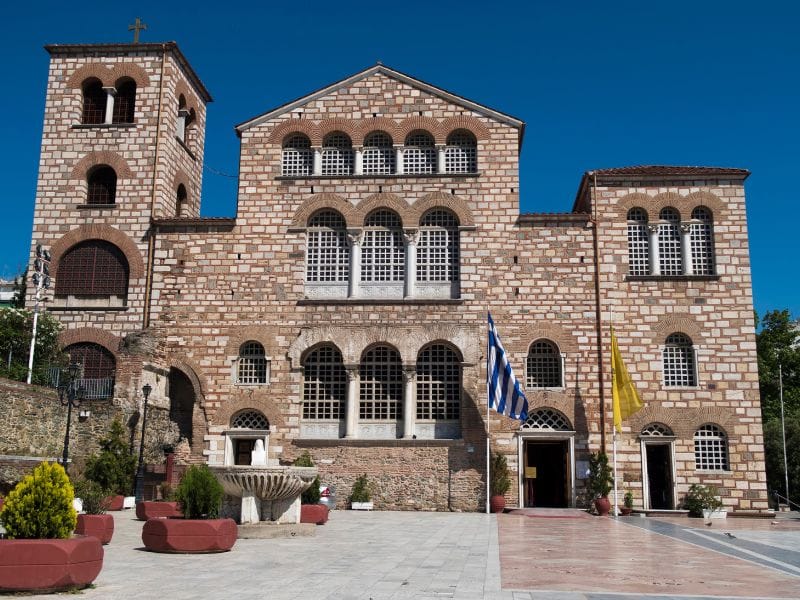
🕙 10:30 AM — Hagios Demetrios
Walk west along Egnatia Street until the towers of Hagios Demetrios rise above the streets.
This basilica isn’t just a landmark — it’s the emotional center of the city. Named after Thessaloniki’s patron saint, the 7th-century church holds layers of devotion accumulated across disasters, fires, and reconstructions.
Inside smells of candle wax and incense. Mosaics glimmer in half-light. But the real experience waits below.
Descend into the crypt.
This underground space, once linked to the saint’s imprisonment and martyrdom, feels intimate and raw. Stone pillars, faint water echoes, museum displays set quietly against the walls — it doesn’t resemble a modern exhibition so much as a preserved memory.
If one place brings you closest to the heartbeat of Byzantine Thessaloniki, it’s here.
Midday — Slow Streets and Hilltop Faith
🕛 12:00 PM — Ano Poli
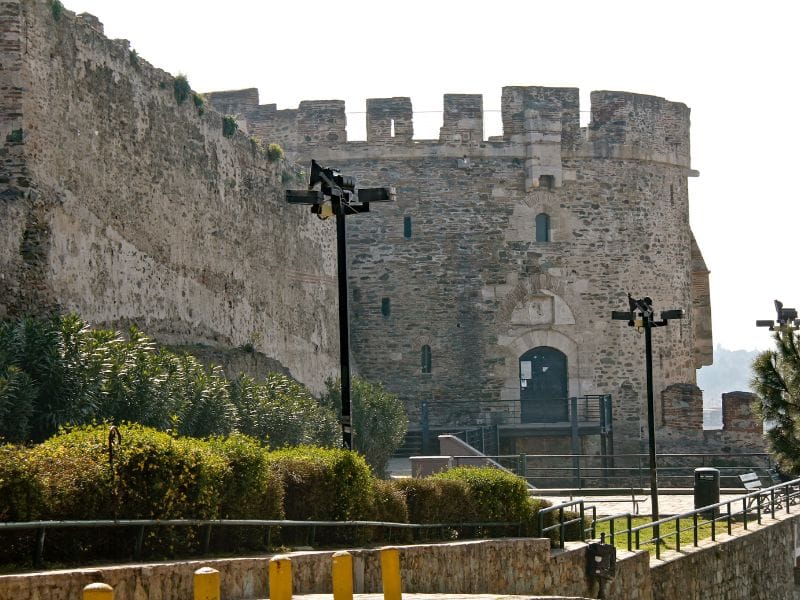
Now comes the climb. From Hagios Demetrios, take the winding streets upward into Ano Poli, the Upper Town. This district survived the devastating fire of 1917 largely intact, which is why the city suddenly feels older here.
Streets narrow. Houses lean toward each other. The noise thins. You begin seeing panoramic glimpses of sea and port far below.
Two stops matter most.
First, the Monastery of Vlatadon, still active after more than six centuries. Monk’s gardens, shaded courtyards, and some of the finest views in Thessaloniki await at the summit. It’s peaceful enough that you might forget you’re inside a major city.
Then comes Hosios David — the Latomou Monastery. Small on the outside, astonishing within. Its 5th-century mosaic of Christ in Glory belongs to that rare group of early Christian artworks that survived both time and iconoclasm. It feels almost fragile — and impossibly powerful.
🍽️ Lunch Tip: Find any family taverna with a terrace in Ano Poli. Order something simple. Sit longer than necessary. This isn’t a place to rush.
Afternoon — The Museum That Ties It All Together
🕒 3:00 PM — Museum of Byzantine Culture
After lunch, descend toward the waterfront to reach the Museum of Byzantine Culture — perhaps the finest place to truly understand Byzantine Thessaloniki.
Architect Kyriakos Krokos designed the building as an extension of the collection rather than a container for it. Soft light, muted stone, open interior spaces — nothing competes with the artifacts on display.
Inside you’ll find icons glowing with gold leaf, fragments of frescoes rescued from forgotten chapels, delicate jewelry worn by everyday Byzantines, and entire reconstructed domestic rooms that quietly reconstruct medieval life.
Don’t rush it. This is where everything you’ve walked past earlier suddenly gains context.
🏛️ The museum doesn’t summarize Byzantium — it humanizes it.
Extra Stops — Only If You Still Have Energy
Not done yet? Nearby waits Hagia Sophia of Thessaloniki, echoing its famous namesake in Constantinople with domes and fading frescoes. Close to the Roman Forum stands Panagia Chalkeon, the “Red Church” — small, brick-built, and deeply atmospheric.
Hidden near Kassandrou Street lies the Byzantine Bathhouse, one of only a handful of preserved public baths from the period in Greece. It’s proof that daily comfort mattered alongside sacred devotion.
Practical Thoughts for Walking Byzantine Thessaloniki
Wear shoes you can trust. These streets aren’t flat.
Start early, especially in warm months. Most churches are free to enter, though weekends may bring closures during services. The Museum of Byzantine Culture charges a modest admission.
Photography rules vary — if in doubt, ask or simply observe instead.
Spring and autumn make the best seasons for this walk — cooler air, quieter streets, better light.
Final Reflections
In one day, you’ve crossed more than fifteen centuries — from Roman imperial grandeur to hidden monasteries and glowing mosaics.
But the honest truth about Byzantine Thessaloniki is this: you can never finish it. It doesn’t operate like a checklist. The past here isn’t something you conquer in a day — it seeps into you quietly, between steps, inside crypts, under domes.
Sometimes the most powerful moments aren’t the grand monuments at all.
They’re the alleys between them.