
Byzantine Heritage of Thessaloniki: A City Built on Centuries of Faith and Memory
Table of Contents
A City Built on Centuries of Memory
Thessaloniki is one of those places where history doesn’t sit quietly in a museum — it follows you in the streets.
You might be walking to grab a coffee, and suddenly a fifth-century basilica appears between apartment blocks. That’s the rhythm of the city. The old and the new overlap so naturally that you barely notice the transition.
And this feeling has a name: Byzantine heritage of Thessaloniki.
It’s not an academic term here — it’s simply the way the city breathes.
A Crossroads That Became a Second Capital
Thessaloniki’s importance didn’t happen by accident. Its harbor opened to the Aegean, its roads reached deep into the Balkans, and its markets drew merchants from every corner of the Mediterranean.
Because of this, the city evolved into a major administrative, commercial, and spiritual hub of the Eastern Roman Empire.
For over a thousand years, emperors, pilgrims, scholars, soldiers, and artisans passed through this port. Their stories left an imprint that continues to shape Thessaloniki today.
The Monuments That Define the Byzantine Heritage of Thessaloniki
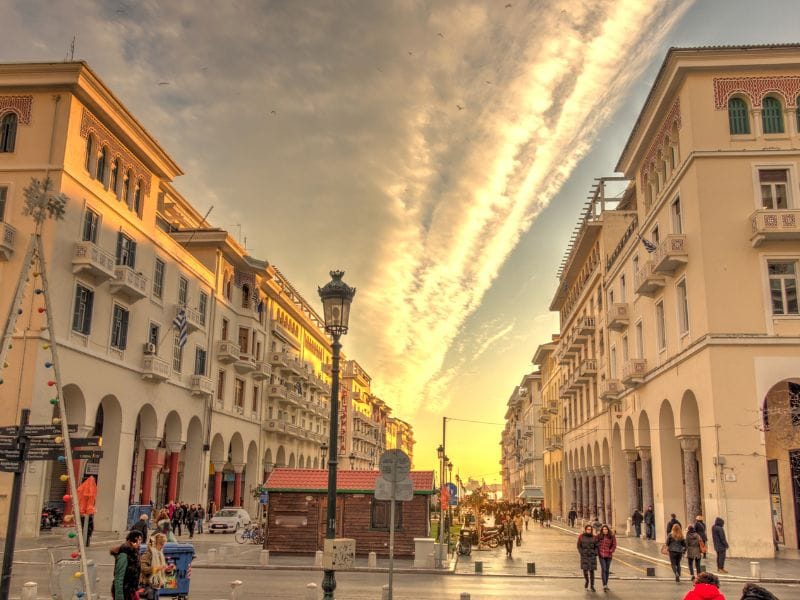
The city’s Byzantine soul is most visible in its monuments — not as isolated landmarks, but as part of everyday life.
Hagia Sophia
A smaller cousin of Constantinople’s great cathedral, with a dome that seems to hover above the nave.
The Rotunda
A huge round structure that has shifted identities over time — from mausoleum to church to mosque. Its mosaics are some of the most astonishing in Greece.
Church of Saint Demetrios
Dedicated to the city’s patron, it is both a basilica and a powerful symbol of Thessaloniki’s collective memory.
These structures don’t feel like distant relics. They feel lived-in, familiar, almost conversational.
Walls, Monasteries, and Quiet Corners That Still Speak
Walk uphill to the Upper Town and the ancient walls stretch beside you like a stone timeline.
They once guarded the city from sieges and invasions; now they offer some of the best views of the Thermaic Gulf.
Hidden between those slopes are old monasteries — places where monks once copied manuscripts, tended gardens, and kept intellectual life alive during turbulent centuries.
These quiet corners say as much about the Byzantine heritage of Thessaloniki as any grand monument.
Art That Survived Empires
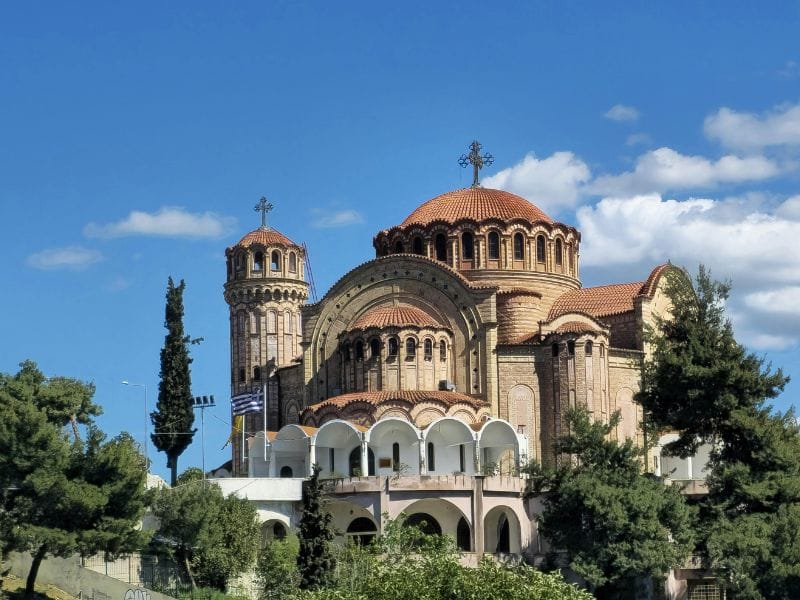
The city’s Byzantine identity is also expressed through its art:
- shimmering mosaics that capture light the way icons capture emotion
- late-Byzantine frescoes full of movement and human expression
- icons painted in local workshops that became famous far beyond Greece
Stand in front of a 14th-century icon and you’ll notice a certain gaze — soft yet knowing. Thessaloniki’s artists mastered this spiritual subtlety, creating images meant not just to depict, but to communicate.
Everyday Life in a Byzantine Metropolis
Thessaloniki was not only a city of saints and emperors. It was also a city of families, craftsmen, and traders.
Markets filled the streets with pottery, fabrics, spices, and metalwork. Guilds maintained high standards for artisans, and the port brought influences from distant places.
Archaeological finds — oil lamps, jewelry, cooking vessels, coins — reveal a society that balanced practicality with deep faith.
This blend of daily life and devotion is a key part of the Byzantine heritage of Thessaloniki.
The Museum of Byzantine Culture: The City’s Memory Keeper

If you want to understand how all these layers fit together, the Museum of Byzantine Culture is the place to go.
Designed by architect Kyriakos Krokos, the building itself feels calm and contemplative, almost monastic.
Inside, visitors can follow a clear narrative through:
- mosaics
- icons
- ceramics
- inscriptions
- textiles
- architectural fragments
Nothing feels overcrowded or overwhelming. The museum invites you to slow down and let the story unfold gradually.
A Living Heritage, Not a Distant Past
The Byzantine heritage of Thessaloniki isn’t something you “visit.”
It’s something you notice — in the dome above you, in the scent of incense drifting from a side street, in the way centuries coexist without friction.
The city never tried to hide its past.
Instead, it let it stay visible, woven into its daily routine.
And if you spend enough time here, you start to understand:
Thessaloniki isn’t simply preserving Byzantine memory.
It continues to live inside it.